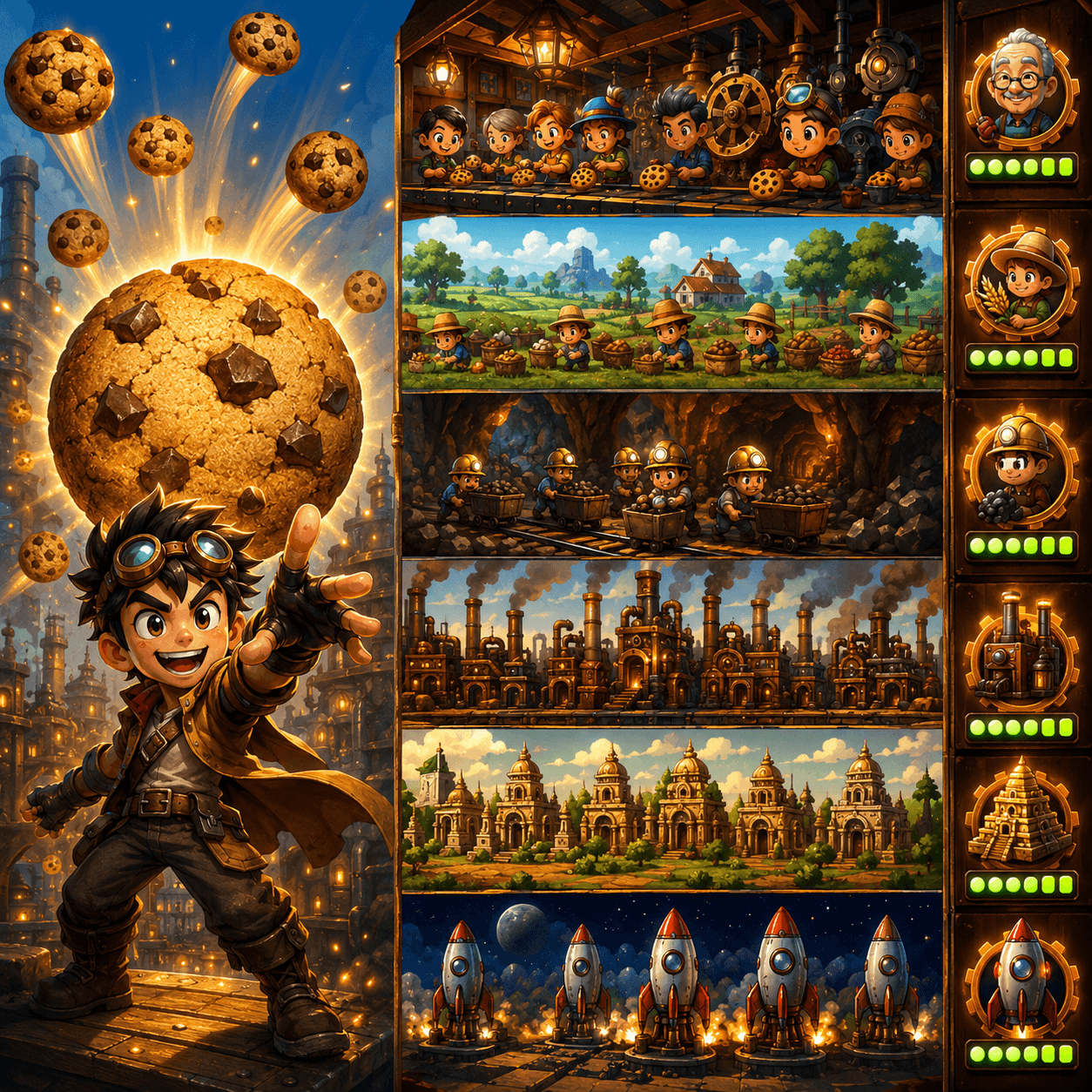
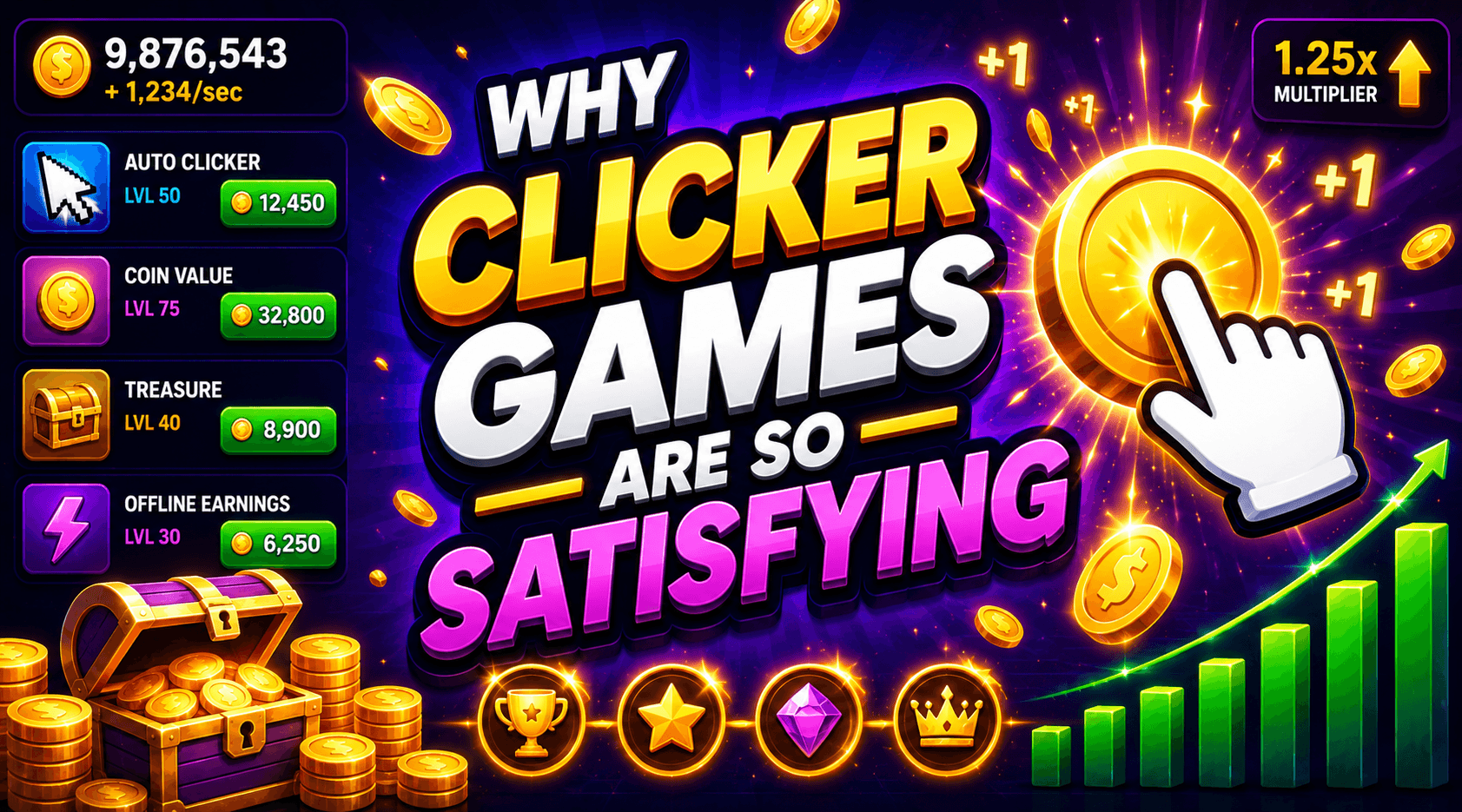
Clicker games shouldn't work. There's barely any gameplay. And yet the tab stays open for weeks — here's why.
The loop in one sentence
Do a small thing, get a number, spend the number to make the small thing bigger. That's it — and it maps almost perfectly onto how reward anticipation works, because the next upgrade is always just close enough to feel reachable.
Idle progression is the second hook. Knowing the counter keeps running while the tab is closed turns coming back into its own reward, and the first thing you do on return is spend a pile of currency you didn't have to work for.
Prestige and the long game
Most clickers eventually offer a reset that trades your progress for a permanent multiplier. It sounds like losing, but it's the actual game: each cycle gets you further, faster, and the decision of when to reset is the only real strategic choice most of these titles ask you to make.
Reset too early and you waste the run's momentum; too late and you grind through hours of slow progress you could have skipped in minutes.
Playing them well — and knowing when to stop
Buy the cheapest upgrade that increases your rate rather than saving for the flashy one, at least early on. Compounding does more for you than any single big purchase.
And set an exit point before you start. These games are designed to have no ending, so the only natural stopping place is the one you decide on.