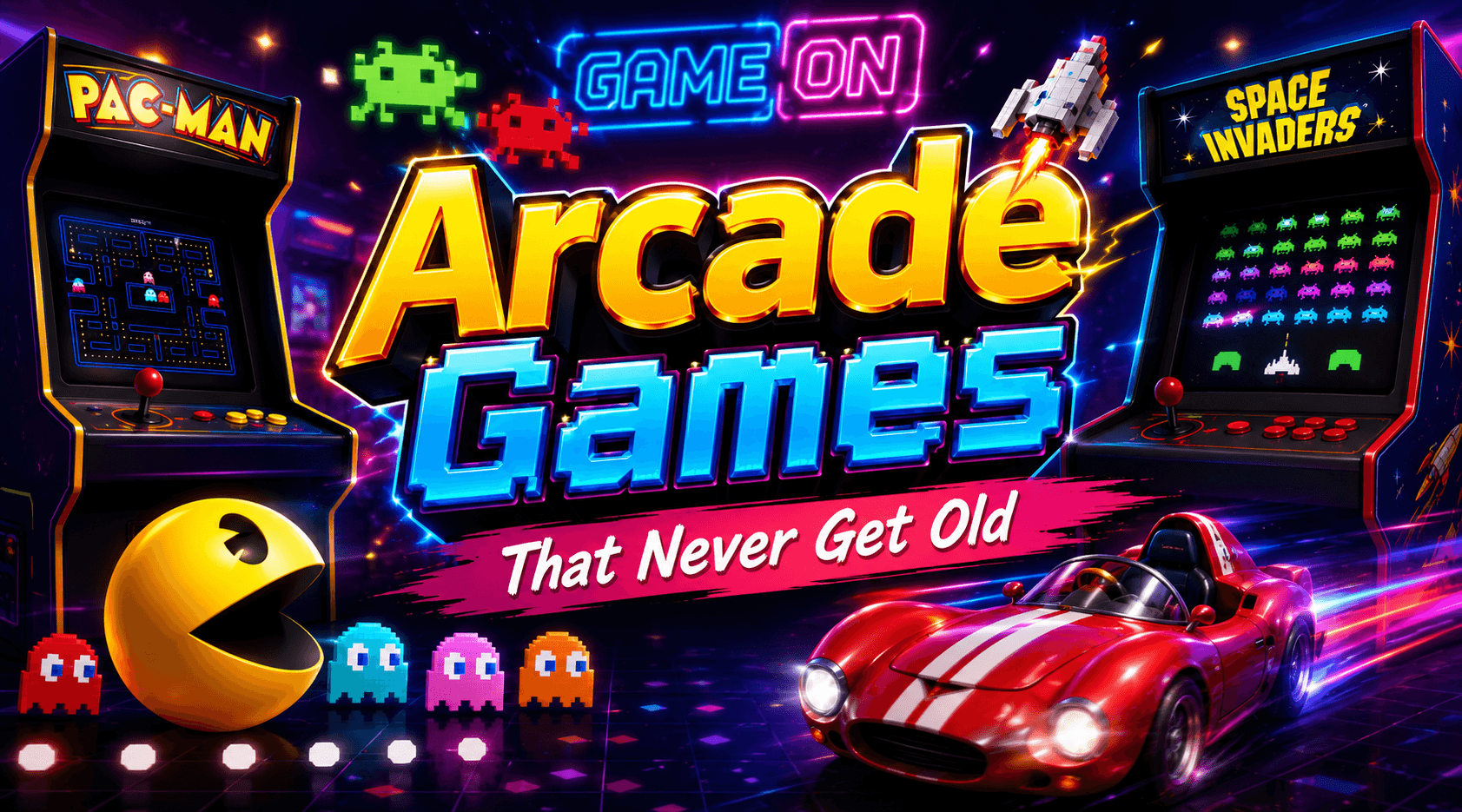
Decades after the coin slots disappeared, arcade games are still the purest thing in gaming: one rule set, one score, one more go.
Why the format still works
An arcade game has to explain itself in about three seconds and hook you in ten. That constraint produced some of the tightest design in the medium — simple inputs, escalating difficulty, and a score that turns every run into a personal challenge. Nothing about that has aged.
It also fits the way people actually play in a browser. There's no save file to manage and no progress to lose. You open a tab, chase a number, and close it when you're done.
The one-more-go loop
The magic ingredient is a short gap between failure and the next attempt. When restarting takes one click, a loss reads as feedback rather than punishment, and you're back in before frustration can set in. Games that make you sit through a menu after every death break the spell.
That loop is also why arcade scores climb so fast. Twenty quick attempts teach you more than one careful one, because you're constantly testing small changes against the same familiar opening.
Chasing a higher score
Learn the first thirty seconds cold. Most arcade runs are lost to sloppy early play, not to the hard part later — if the opening is automatic, you arrive at the difficult stretch with full focus and more room for error.
Then pick one habit to fix per session. Trying to improve everything at once tends to make every run slightly worse; changing a single thing makes the result easy to read.