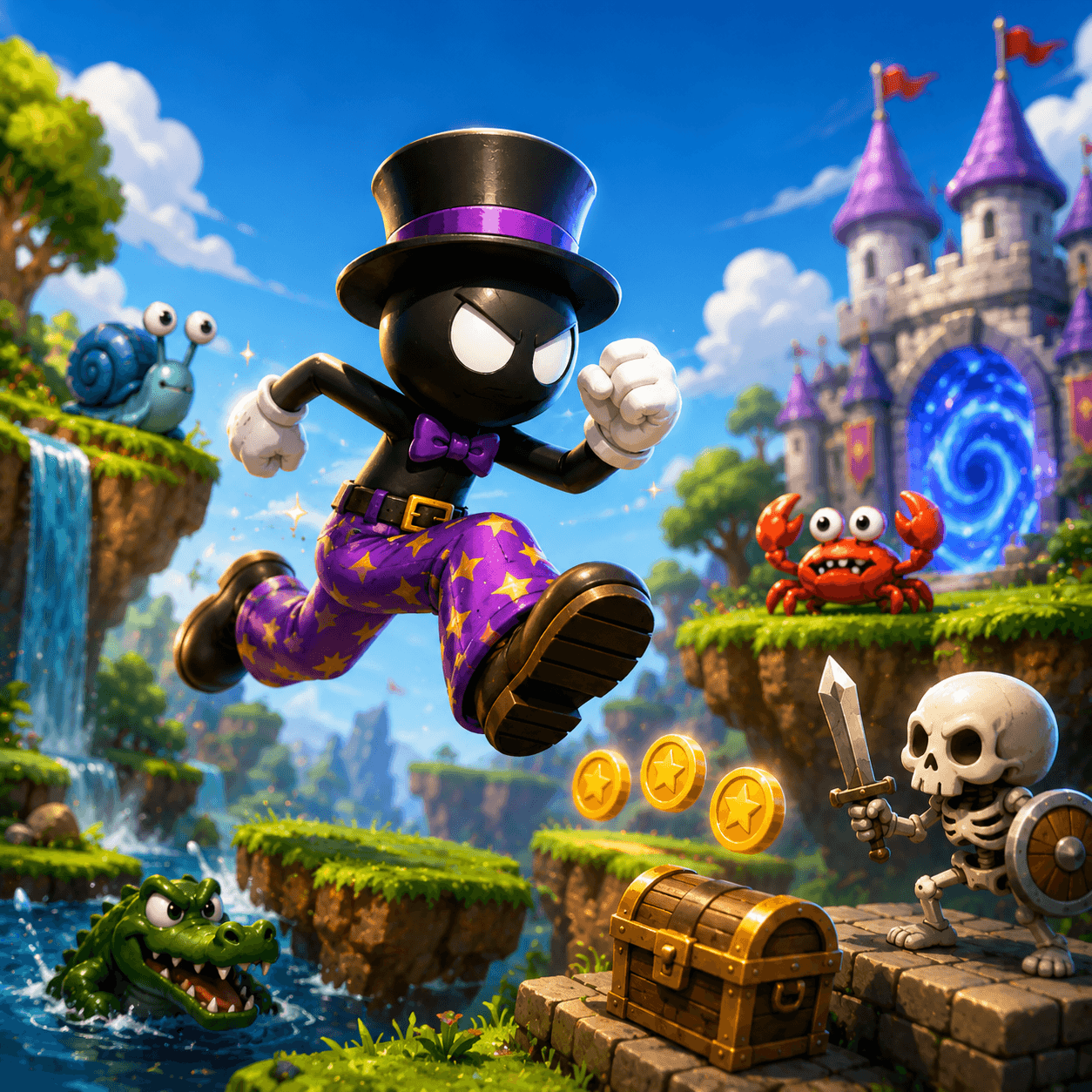

Platformers are the genre where a single button becomes a whole vocabulary. Here's why they're so hard to put down and how to clear the level that keeps beating you.
Everything comes down to feel
A platformer is judged almost entirely on how the jump feels — how fast you accelerate, how much control you have in the air, whether the game forgives a press made a frame after you left the ledge. Get that right and even simple levels are a joy; get it wrong and no amount of level design saves it.
The best browser platformers keep their move set tiny and build difficulty out of arrangement instead. You never learn a new ability, you just learn to use the one you have more precisely.
Why retrying feels good here
Instant respawns turn death into punctuation. Because you restart at the last checkpoint in under a second, a hard section becomes a rhythm you practise rather than a wall you bounce off — and the moment it finally clicks is the entire appeal of the genre.
That's also why level length matters more than difficulty. A brutal thirty-second stretch is fun; the same challenge three minutes from a checkpoint is not.
Clearing the section that keeps killing you
Slow down. Most platformer deaths come from arriving at an obstacle too fast to react, not from being too cautious. Take a beat on the safe platform before the hard jump and you'll clear it far more often.
Break the sequence into two or three chunks and get each one automatic before linking them. Trying to nail a long run in one piece means every attempt re-practises the easy start instead of the part you're actually failing.